When Water Damage Is Spreading Beneath Your Foundation, Every Hour Counts
Facing a suspected or confirmed slab leak is one of the most stressful situations for property owners. Signs like skyrocketing water bills, wet spots on floors, foundation cracks, or the sound of running water when fixtures are off may indicate a slab leak. Tenants might complain about damp carpets, mold smells, or water pressure issues.
Slab leaks don’t resolve themselves. Water flowing beneath your concrete foundation can erode soil, compromise structural integrity, and turn manageable repairs into catastrophic expenses. At Innovative Plumbing and Heating, we specialize in honest, transparent slab leak repair services that solve the problem permanently without destroying your property or budget. As a locally owned, family-operated business at 2222 E 74th Ave. unit 6, Denver, CO 80229, we’ve helped hundreds of Denver property owners navigate this exact crisis.
Understanding Slab Leaks: What You’re Really Dealing With
What Is a Slab Leak and Why Is It So Serious?
A slab leak occurs when water or sewer pipes beneath your concrete foundation develop cracks, holes, or breaks. These leaks are dangerous because they happen invisibly, often for weeks or months before symptoms appear. During construction, plumbing lines are installed before the concrete is poured, embedding them beneath the foundation. When these pipes fail, water escapes into the ground, causing extensive damage.
Denver’s unique environmental conditions make slab leaks common. Corrosion from mineral-rich water, ground shifting, poor installation, abrasion, chemical reactions, temperature fluctuations, and high water pressure are frequent causes. Older properties built between the 1960s and 1980s are especially vulnerable due to construction standards that left pipes unprotected from abrasion.
Water escaping from a slab leak erodes soil beneath your foundation, creating voids and instability. This leads to cracking, settling, and structural issues. Inside your building, moisture damages flooring, promotes mold growth, and creates musty odors. For commercial properties, slab leaks can make spaces unusable, drive away customers, and create liability concerns.
Warning Signs You Shouldn’t Ignore
Physical evidence of slab leaks:
- Unexplained increases in water bills
- Sound of running water when fixtures are off
- Warm spots on floors
- Cracks in walls, floors, or foundation
- Moisture or standing water on floors
- Persistent mildew or mold odors
- Reduced water pressure
- Doors and windows sticking due to foundation shifting
Business impact indicators:
- Tenant complaints about water-related issues
- Visible water damage to tenant improvements
- Pooling water around your building’s exterior
If you’re experiencing multiple warning signs, the likelihood of a slab leak increases dramatically. Acting quickly minimizes damage and repair costs.
Why Innovative Plumbing and Heating Is Different: The Repair Approach Denver Property Owners Trust
Our Minimally Invasive Slab Leak Repair Process
When you call Innovative Plumbing and Heating at 720-287-2562, you’re gaining a partner who understands what’s at stake. We prioritize minimally invasive techniques to preserve your property while delivering permanent repairs.
Our repair process includes:
- Same-day emergency service
- Advanced electronic leak detection using acoustic and infrared technology
- Precise pinpointing of leak location
- Transparent pricing
- Multiple repair options tailored to your situation
- Complete testing to verify repairs
- Thorough cleanup and restoration
- Clear warranties to protect your investment
Our technicians use state-of-the-art leak detection equipment to locate leaks with pinpoint accuracy, reducing repair costs and disruption. Unlike companies that upsell unnecessary services, we focus on fixing what’s broken. As a family-owned business, our reputation depends on doing right by our Denver neighbors.
Advanced Leak Detection Technology
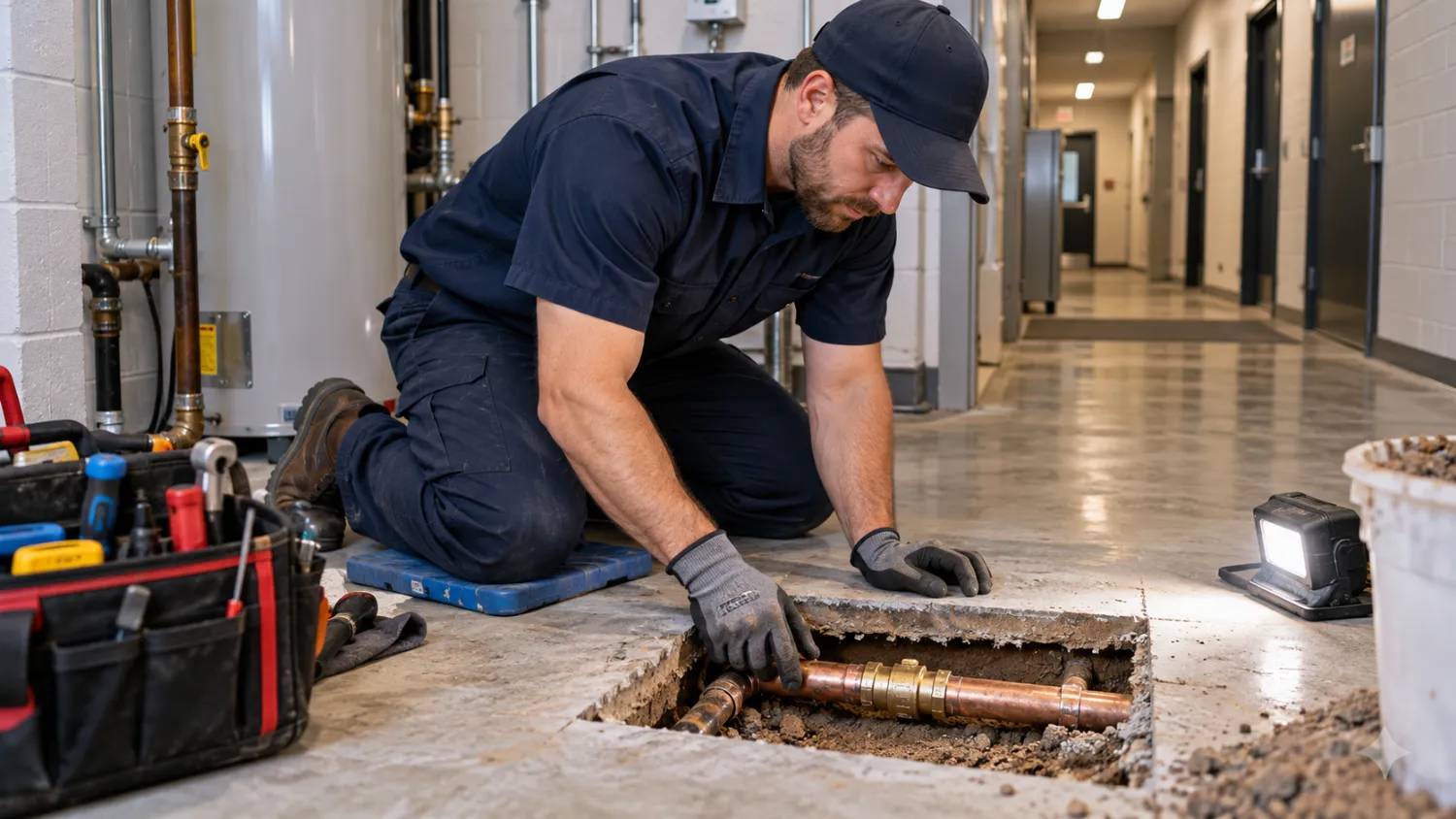
Accurate leak detection is critical. Our electronic amplification equipment detects the sound frequency of escaping water, while infrared thermal imaging identifies temperature variations from hot water leaks. Pressure testing isolates problem areas, and video camera inspections provide detailed views of accessible pipes. This technology allows us to pinpoint leaks within inches, minimizing unnecessary demolition.
Repair Options That Make Sense for Your Situation
We present repair options tailored to your situation, explaining pros, cons, timeframes, and costs. Common methods include:
- Spot repair for isolated problems
- Epoxy pipe lining to create a new pipe within the old one
- Pipe rerouting to bypass damaged sections
- Trenchless pipe replacement for extensive damage
- Traditional excavation when cost-effective
The recommended method depends on factors like leak location, plumbing system condition, building construction, budget, and timeline. We help you make informed decisions that align with your priorities.
The Real Cost of Delaying Slab Leak Repair
What Happens If You Wait
Slab leaks worsen over time, accelerating damage and repair costs. Delayed repairs lead to:
- Ongoing water waste adding hundreds to utility bills
- Progressive foundation damage turning modest repairs into major expenses
- Mold growth requiring expensive remediation
- Structural settling causing additional cracks
- Tenant frustration leading to lease breaks
- Liability for tenant property damage or health issues
- Decreased property value
- Insurance complications if damage is deemed preventable
Foundation damage is the most serious consequence. Water erodes soil beneath your slab, creating voids and causing settling. Repairing foundation damage caused by a long-standing slab leak can cost tens of thousands of dollars. Acting quickly minimizes expenses and prevents secondary problems.
Why Property Owners Choose Innovative Plumbing and Heating
Denver property owners trust us for honest, reliable service during critical situations. We offer:
- Family-owned and operated service
- 5-star rating from 83+ verified reviews
- Same-day appointments without premium pricing
- Transparent pricing with no hidden fees
- Expertise in residential and commercial plumbing
- Complete service from detection to repair
- Clear warranties
- Proven track record of minimally invasive repairs
Our reputation reflects consistent quality and customer service. We charge fair prices for lasting results without upselling or cutting corners.
Take Action Now: Schedule Your Slab Leak Inspection Today
What Happens When You Call Innovative Plumbing and Heating
The hardest part of dealing with a slab leak is deciding to take action. Once you call us at 720-287-2562, the path forward becomes clear.
Here’s what to expect:
- Speak with a real person who understands your urgency
- Schedule a same-day appointment
- Technician arrives on time with professional equipment
- Thorough inspection using advanced leak detection technology
- Clear explanation of findings and repair options
- Transparent pricing with no surprise fees
- Efficient repairs scheduled to minimize disruption
- Complete testing, cleanup, and warranty documentation
Most slab leak repairs can be completed within one to three days. We work efficiently to ensure quality results, thoroughly test repairs, clean up the work area, and provide warranty documentation.
Don’t Let This Problem Destroy What You’ve Built
Slab leaks don’t have to become disaster stories. With prompt action and professional repair, they can simply become maintenance issues you handled effectively.
Call Innovative Plumbing and Heating now at 720-287-2562 for:
- Same-day inspection and diagnosis
- Honest pricing with no hidden fees
- Minimally invasive repair options
- Fast completion to keep tenants operational
- Clear warranties to protect your investment
Or visit us at 2222 E 74th Ave. unit 6, Denver, CO 80229. Don’t let uncertainty or fear of the unknown keep you from addressing a problem that’s only getting worse. Call us today, and let’s solve this together.