Stop Losing Sleep Over Your Commercial Cooling System—Before It’s Too Late
Imagine walking into your building on a scorching July morning, and something feels off. The air is heavy, tenants are already complaining, and your phone won’t stop buzzing. You think, not again. Here’s the truth about commercial cooling systems: by the time you notice a problem, it’s often too late. That strange noise last month? A warning. Higher energy bills? A red flag. A tenant mentioning their office feels warmer? Your system was begging for attention. Now you have a choice. You can hope your system holds up through the summer, risking a failure during the hottest week when every HVAC contractor in Denver is booked solid. Or, you can do what successful property managers in Denver already do: schedule a professional cooling system inspection before disaster strikes.
Why Choose Innovative Plumbing and Heating for Cooling System Inspections?
We’ve heard it all from property managers across Denver. They’ve paid for preventive maintenance contracts that didn’t prevent anything. They’ve hired contractors who rushed through inspections, missed critical issues, and disappeared when problems arose. One property manager shared how he paid for quarterly inspections from a national chain, only for his cooling system to fail on a 95-degree day. When he called the company, they couldn’t send someone for five days. Five days of angry tenants, lost productivity, and a repair bill that made his building owner question his competence. That’s not how we operate at Innovative Plumbing and Heating Solutions. When you call 720-287-2562, you’re reaching a team that understands the stakes. We know that your cooling system isn’t just equipment—it’s the foundation of tenant satisfaction, property value, and your professional reputation. Our inspections are designed to catch problems before they cascade into emergencies, giving you the information you need to make smart decisions about maintenance and repairs.
Our Comprehensive Cooling System Inspection Process
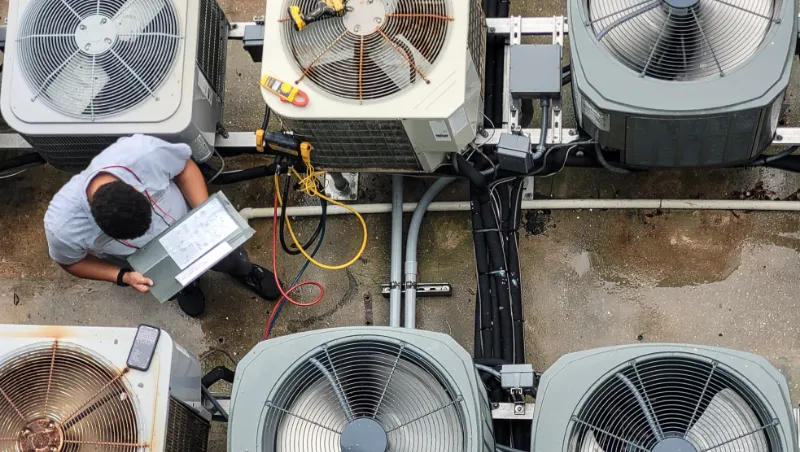
Detailed Visual Assessment and Component Analysis Our technicians begin every inspection with a thorough visual examination of your entire cooling system. This isn’t a quick walkthrough with a clipboard. We systematically evaluate every component that keeps your building comfortable, looking for the subtle signs of wear, damage, or impending failure that less experienced technicians miss.
- Examination of condensers, evaporators, compressors, and expansion valves
- Inspection of refrigerant lines for wear, corrosion, or leaks
- Assessment of electrical connections, capacitors, and control systems
- Evaluation of ductwork integrity and air distribution efficiency
- Identification of safety hazards or code compliance issues
We don’t just check boxes. We look for the specific issues that lead to failures in Denver’s unique climate. For example, we inspect condensing units for refrigerant oil staining, which indicates leaks that will eventually cause system failure. We evaluate capacitors for bulging or leaking, common failure points that can disable your entire system. Our ductwork inspections go beyond looking for obvious holes—we check for separated joints, crushed sections, and inadequate insulation that wastes conditioned air and drives up energy costs. Performance Testing and Efficiency Measurement Visual inspections only tell part of the story. A cooling system can look perfectly fine while operating at dangerously reduced efficiency or heading toward catastrophic failure. That’s why we conduct comprehensive performance testing on every system we inspect.
- Refrigerant pressure testing to ensure optimal charge levels
- Temperature differential measurements across cooling coils
- Airflow volume testing to verify proper circulation
- Electrical current draw analysis to identify overworked motors or compressors
- Thermostat calibration and control system verification
Most inspections stop at visual checks. We go further, testing performance to uncover hidden inefficiencies. For example, refrigerant pressure testing identifies systems operating with incorrect charge levels—either overcharged or undercharged—both of which reduce efficiency and shorten equipment life. Airflow testing reveals problems with blower motors, belt tension, or duct restrictions that force your system to work harder than necessary. Comprehensive Documentation and Reporting After every inspection, you’ll receive a detailed report with photographs, findings, prioritized repair recommendations, and a timeline for addressing issues. This documentation protects you during budget discussions and proves you’re being proactive. Our reports translate technical findings into actionable information. We categorize issues by urgency: immediate safety concerns, problems requiring attention within 30 days, issues to address within the next season, and observations for long-term planning. Each finding includes photographs showing exactly what we discovered, explanations of why it matters, and recommendations for resolution.
Why Denver Properties Need Regular Cooling System Inspections
Denver’s climate is tough on cooling systems. Temperature swings of 40 degrees in a day, high-altitude UV exposure, and dry air all accelerate wear and tear. Your system works harder here than almost anywhere else, and when it fails, it fails catastrophically. The combination of intense UV radiation at Denver’s altitude, dramatic temperature fluctuations, and low humidity creates unique challenges for cooling equipment. Rubber components deteriorate faster, electrical connections corrode more readily, and refrigerant pressures fluctuate more dramatically than in more stable climates. Regular inspections identify these climate-specific issues before they cause system failures.
The Cost of Skipping Inspections
Emergency Repairs vs. Preventive Maintenance The financial case for regular inspections is overwhelming. Emergency repairs don’t just cost more for the actual fix—they come with hidden costs that multiply the total impact on your budget and operations.
- Average emergency repair: $3,500-$12,000
- Average cost to address inspection findings: $400-$2,800
- Emergency service wait times: 2-7 days
- Scheduled repairs: Same day to 48 hours
Last August, a retail property manager called us after his cooling system failed on a 93-degree Saturday. Every HVAC company he called was booked or charging triple for weekend service. He finally found someone for $8,500 on Monday. The issue? A failed compressor showing warning signs for months—signs a $300 inspection would have caught. Tenant Satisfaction and Retention Uncomfortable tenants start looking for other buildings. Breaking a lease is expensive, but not as costly as keeping employees in an unpredictable environment. Inspections catch problems before tenants notice, preventing complaints and lease terminations. Energy Efficiency and Operating Costs Cooling systems operating at reduced efficiency don’t announce themselves. They quietly waste thousands in energy costs. Refrigerant leaks, dirty coils, and failing motors all increase energy consumption. During inspections, we often find systems wasting $500-$2,000 monthly—issues invisible without performance testing.
What Property Managers Say About Us
We’ve inspected cooling systems for office buildings, retail centers, industrial facilities, and multi-tenant properties across Denver, Aurora, Lakewood, and beyond. Property managers burned by other contractors become our most loyal clients. One facilities director managing multiple buildings told us he used to wake up at 3 AM, panicking about cooling system failures. After switching to our program, he sleeps through the night. His buildings run smoothly, tenants are happy, and he has documentation proving he’s proactive. Our clients appreciate that we communicate in straightforward terms, explaining technical issues without condescension or unnecessary jargon. They value our responsiveness—when they call 720-287-2562, they reach someone who knows their property and understands their concerns. Most importantly, they trust our recommendations because we’ve proven we’re not trying to sell unnecessary services.
Our Service Area
Innovative Plumbing and Heating Solutions serves Denver and surrounding areas, including Aurora, Lakewood, Arvada, Westminster, Thornton, Centennial, and more. Locally owned and operated, we understand Denver’s unique climate challenges. When you call us, you’re speaking to experts who’ve inspected hundreds of systems in the region.
The Innovative Plumbing and Heating Difference
Family-Owned and Locally Invested We’re a father-son business built on reputation and relationships. We answer to our community, not corporate shareholders. When you work with Innovative Plumbing and Heating Solutions, you’re partnering with a company that plans to serve Denver for generations. Transparent Communication Without Emergency Gouging Emergencies happen, and we don’t exploit them. We provide same-day service at fair rates because that’s how professionals operate. When you call 720-287-2562 with an urgent issue, we prioritize your call and dispatch a technician as quickly as possible. 5-Star Rated Service With 83 5-star reviews, we’ve earned our reputation by delivering on our promises. We show up on time, diagnose accurately, and fix things right the first time.
Schedule Your Cooling System Inspection Today
You have two choices. You can hope your cooling system survives another season, risking tenant complaints, emergency repairs, and your reputation. Or, you can call 720-287-2562 now. Schedule a comprehensive inspection to identify issues while they’re affordable to fix. Protect your property, your budget, and your peace of mind. Innovative Plumbing and Heating Solutions is here to help. Visit us at 2222 E 74th Ave. unit 6, Denver, CO 80229 or contact us today to arrange an inspection that gives you complete visibility into your cooling system’s condition and performance.