
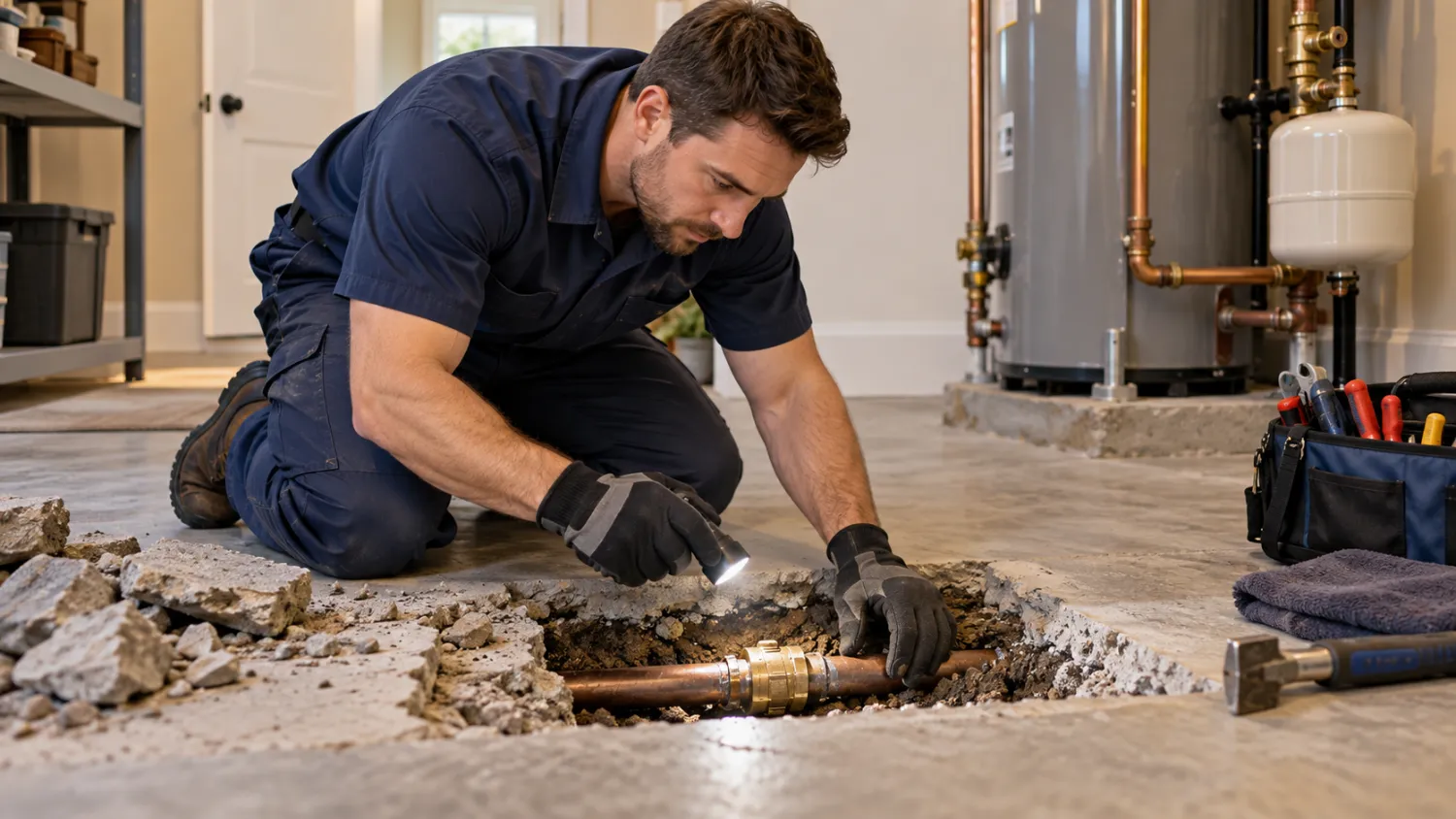
Is Water Silently Destroying Your Home's Foundation?
Have you noticed a wet spot on your floor that won’t dry, a sudden spike in your water bill, or the sound of running water when all faucets are off? Perhaps you’ve felt warm spots on your floor, seen cracks in your walls, or experienced a drop in water pressure. These are all signs of a slab leak—a hidden issue that can cause severe damage to your home’s foundation.
Every hour a slab leak goes unrepaired, it worsens. You might fear foundation failure, black mold, or repair costs that could devastate your finances. Big-name plumbing companies may leave you with confusing diagnoses, pushy sales tactics, and overwhelming quotes. You need someone you can trust to fix the problem correctly and with care.
That’s where Innovative Plumbing and Heating comes in. As a locally owned family business, we’ve been helping Denver homeowners with slab leaks for years. Call us at 720-287-2562 for honest service and solutions that work.
—
Why Denver Homeowners Trust Us With Their Slab Leak Emergencies
Same-Day Service When It Matters Most
Slab leaks are urgent, and we treat them that way. We offer same-day appointments and emergency services. Unlike big franchises that might schedule you weeks out, we prioritize slab leak emergencies to protect your home and finances. Call us at 720-287-2562, and we’ll often have someone at your home within hours.
When water damage occurs, time is your enemy. Every minute allows more water to seep into your foundation, saturate the soil beneath your home, and create conditions for mold growth. Our team is available when you need us most, with fully equipped service vehicles ready to respond.
Advanced Leak Detection Technology
We use state-of-the-art equipment to pinpoint leaks without unnecessary demolition, including:
- Electronic amplification equipment to detect water escaping from pipes
- Infrared thermal imaging to identify temperature changes caused by leaks
- Pressure testing systems to isolate problem areas
- Video camera inspections to verify leak locations and assess pipe conditions
This technology allows us to locate leaks precisely and provide an accurate repair plan before breaking through any concrete. Our tools detect sound frequencies, temperature variations, and pressure drops, ensuring we address the actual problem rather than just treating symptoms.
Minimally Invasive Repair Methods
Many companies default to jackhammering through your floors, but we focus on minimally invasive solutions. Depending on your situation, we might recommend:
- Spot repair: Fixing only the damaged section of pipe, minimizing concrete removal
- Epoxy pipe coating: Sealing leaks from inside the pipe without breaking through your slab
- Pipe rerouting: Bypassing the damaged section entirely by running new pipes through walls or ceilings
We’ll explain your options, the pros and cons of each, and let you make an informed decision—without pressuring you into the most expensive option.
Local Family Business That Cares
As a family-owned business, we live in the same Denver communities we serve, and our reputation is everything. We treat every home like it’s our own and every customer like family. When you work with us, you’re supporting a local business that genuinely cares about solving your problem.
—
Understanding Slab Leaks: What You Need to Know
What Causes Slab Leaks?
Slab leaks occur when water pipes beneath your concrete foundation develop cracks or holes. Denver homes are particularly vulnerable due to:
- Soil conditions: Colorado’s expansive clay soils expand and contract, putting pressure on pipes
- Aging pipes: Homes built in the 1970s-1990s often have aging copper pipes prone to corrosion
- Poor installation: Inferior materials or improper techniques can leave pipes vulnerable
- High water pressure: Excessive pressure accelerates wear on pipes
- Chemical reactions: Interactions between soil, concrete, and copper pipes can cause corrosion
Denver’s unique geological characteristics make slab leaks more common here than in many other parts of the country. Expansive clay soils undergo dramatic volume changes based on moisture content, creating stress on pipes. Aging copper pipes, poor installation practices, and high water pressure further increase the risk.
Warning Signs of a Slab Leak
Catch slab leaks early to minimize damage. Look for:
- Unexplained increases in water bills
- The sound of running water when fixtures are off
- Wet or warm spots on floors
- Cracks in walls, floors, or your foundation
- Mold or mildew smells
- Low water pressure
- Foundation heaving or shifting
If you notice these signs, call us at 720-287-2562 for a professional inspection.
The Cost of Ignoring a Slab Leak
Delaying repairs can lead to:
- Foundation damage: Saturated soil causes settling and cracking, leading to costly structural repairs
- Mold growth: Moisture creates ideal conditions for toxic mold, which is expensive to remediate
- High water bills: A moderate leak can waste thousands of gallons annually, adding hundreds to your bills
- Decreased property value: Foundation issues can reduce your home’s value or make it harder to sell
Repairing a slab leak now is always less expensive than addressing the damage it causes later.
—
Our Proven Slab Leak Repair Process
Step 1: Accurate Leak Detection
When you call us, we’ll schedule a convenient appointment—often the same day. Our licensed plumber will use advanced detection equipment to locate the leak and assess your plumbing system. This ensures we address the root problem, not just the symptoms.
Step 2: Clear Explanation of Options
We’ll explain what we found, what’s causing the issue, and your repair options. For each option, we’ll outline:
- What the repair involves
- The pros and cons for your situation
- How long the repair will take
- What to expect during and after the repair
We’ll answer all your questions so you can make an informed decision.
Step 3: Expert Repair With Minimal Disruption
Once you approve the plan, we’ll get to work. Our plumbers use proven techniques and quality materials to ensure lasting repairs. We minimize mess, protect your home, and clean up thoroughly when we’re done. Most repairs are completed in a single day.
Step 4: Testing and Restoration
After repairing the leak, we test the system to ensure the issue is resolved. We also restore any affected concrete, leaving your home in good condition.
Step 5: Prevention Guidance
Before we leave, we’ll provide tips for monitoring your plumbing system and catching future issues early. We stand behind our work and provide ongoing support.
—
Why Acting Now Protects Your Home
Every day you wait, more water damages your foundation, saturates soil, and creates conditions for mold. Homeowners who delay repairs often face significantly higher costs down the road. Don’t let that happen to you—address the problem now to protect your home and finances.
—
Schedule Your Slab Leak Inspection Today
If you suspect a slab leak, don’t wait. Call Innovative Plumbing and Heating at 720-287-2562 for a professional inspection and honest assessment. We’ll diagnose the problem, explain your options, and provide solutions for permanent repair. You can also visit us at 2222 E 74th Ave. unit 6, Denver, CO 80229, though we recommend calling first to schedule an appointment.
Protect your home and your peace of mind. Call 720-287-2562 today, and let’s get your slab leak fixed.